How to Track Handball Goalkeeper Performance
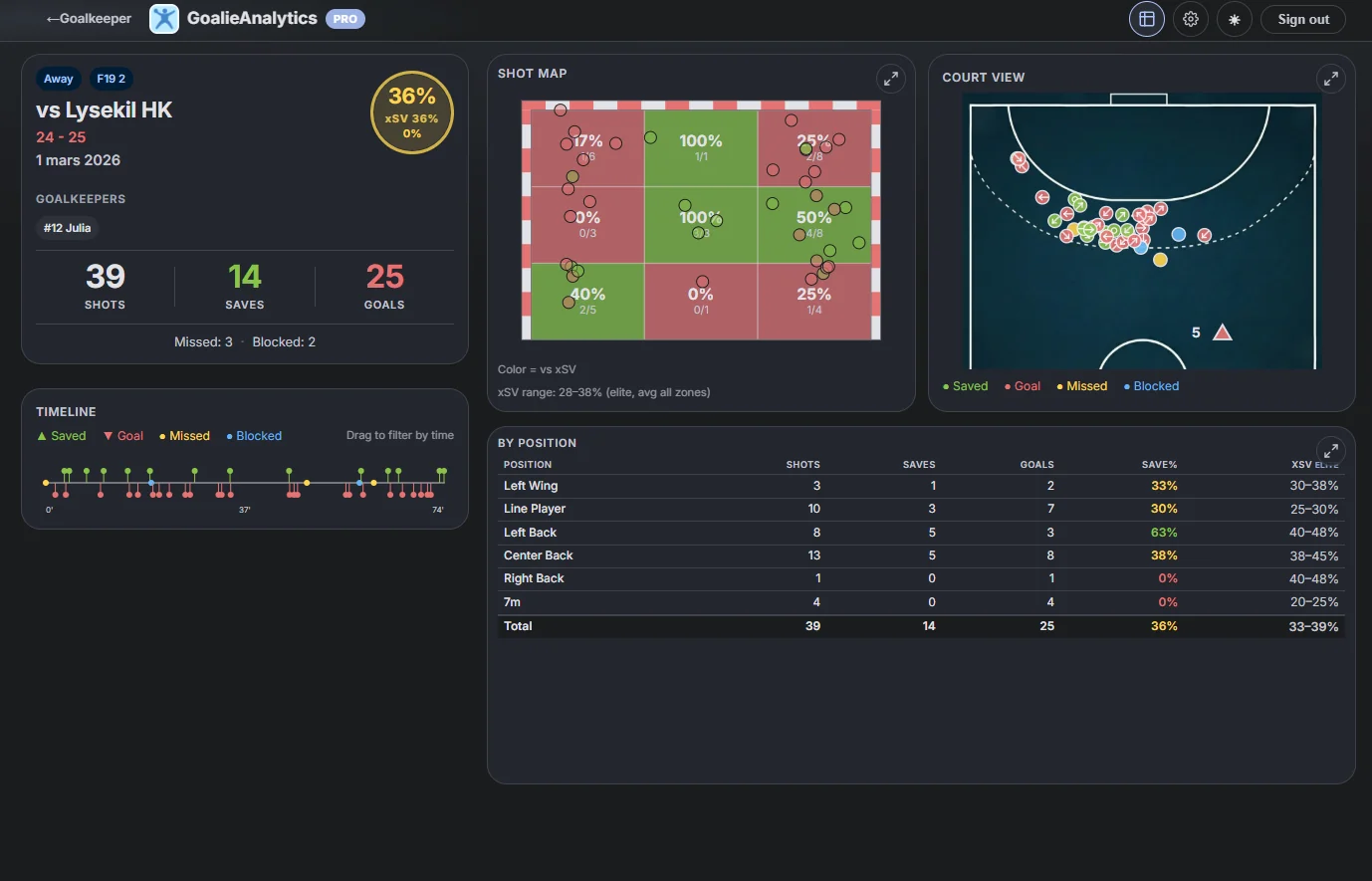
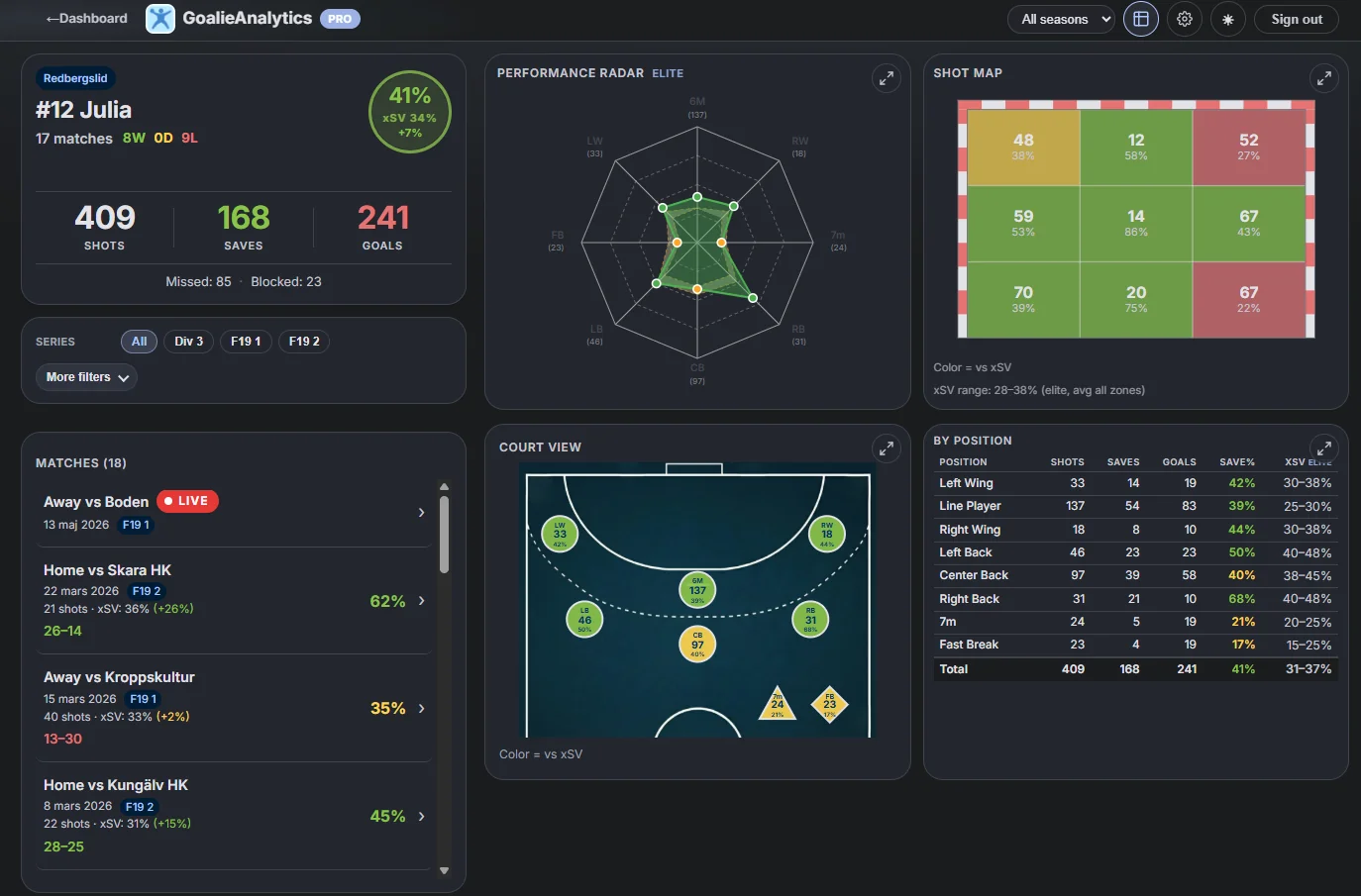
Save percentage on its own says very little about how well a goalkeeper actually played. Here is how we track shot zones, goal placement and expected saves to get a fairer picture.
Read guide →Practical strategies, shot mapping techniques, and data-driven insights to elevate goalkeeper performance.
Save percentage on its own says very little about how well a goalkeeper actually played. Here is how we track shot zones, goal placement and expected saves to get a fairer picture.
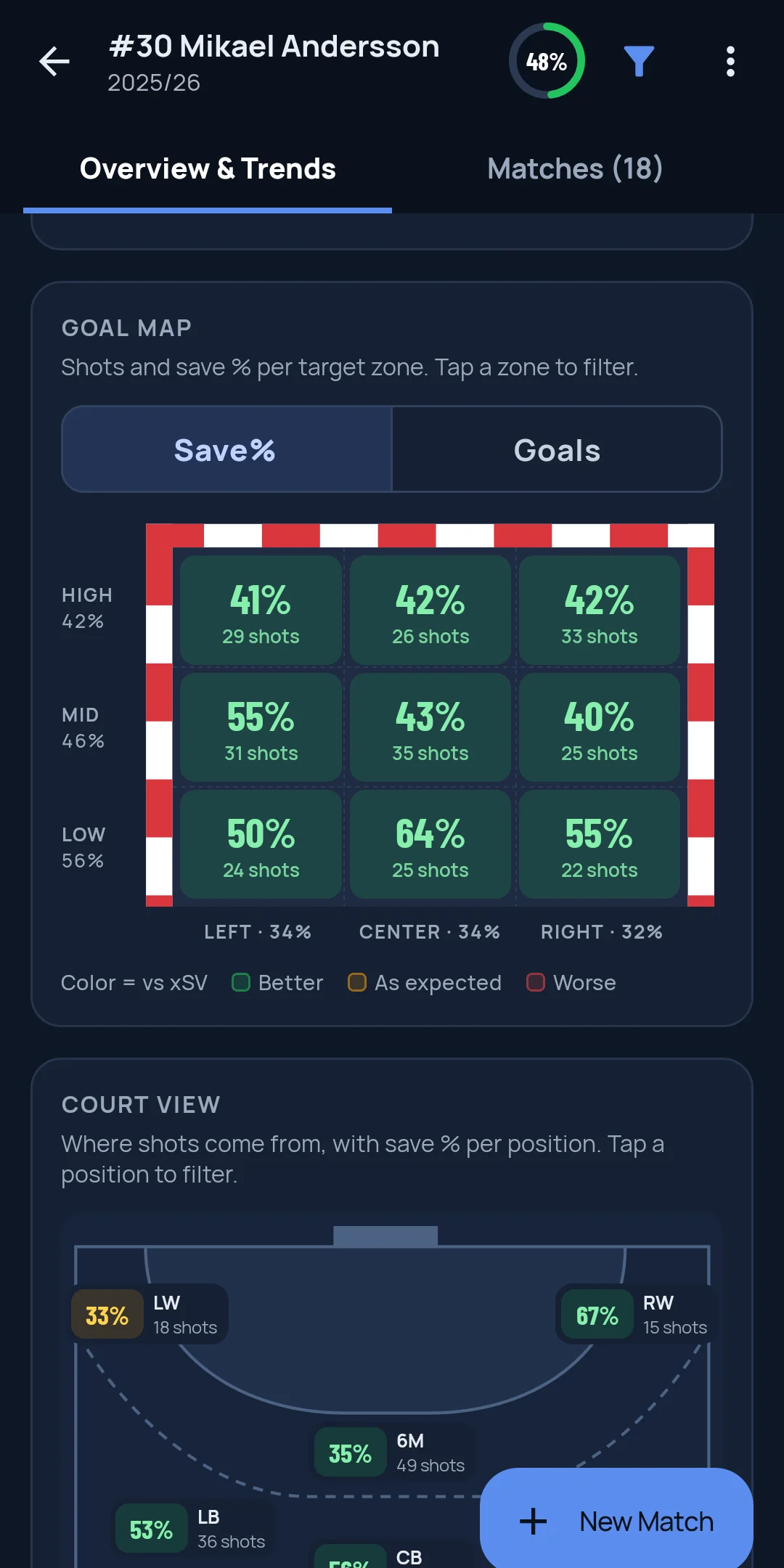
Read guide →Two goalkeepers can finish on the same save percentage after two very different matches. Expected Saves (xSV) takes shot difficulty into account, so you can see which one actually played better.
Read guide →You can track a lot of things about a goalkeeper. These are the five statistics we have found actually change how you train.
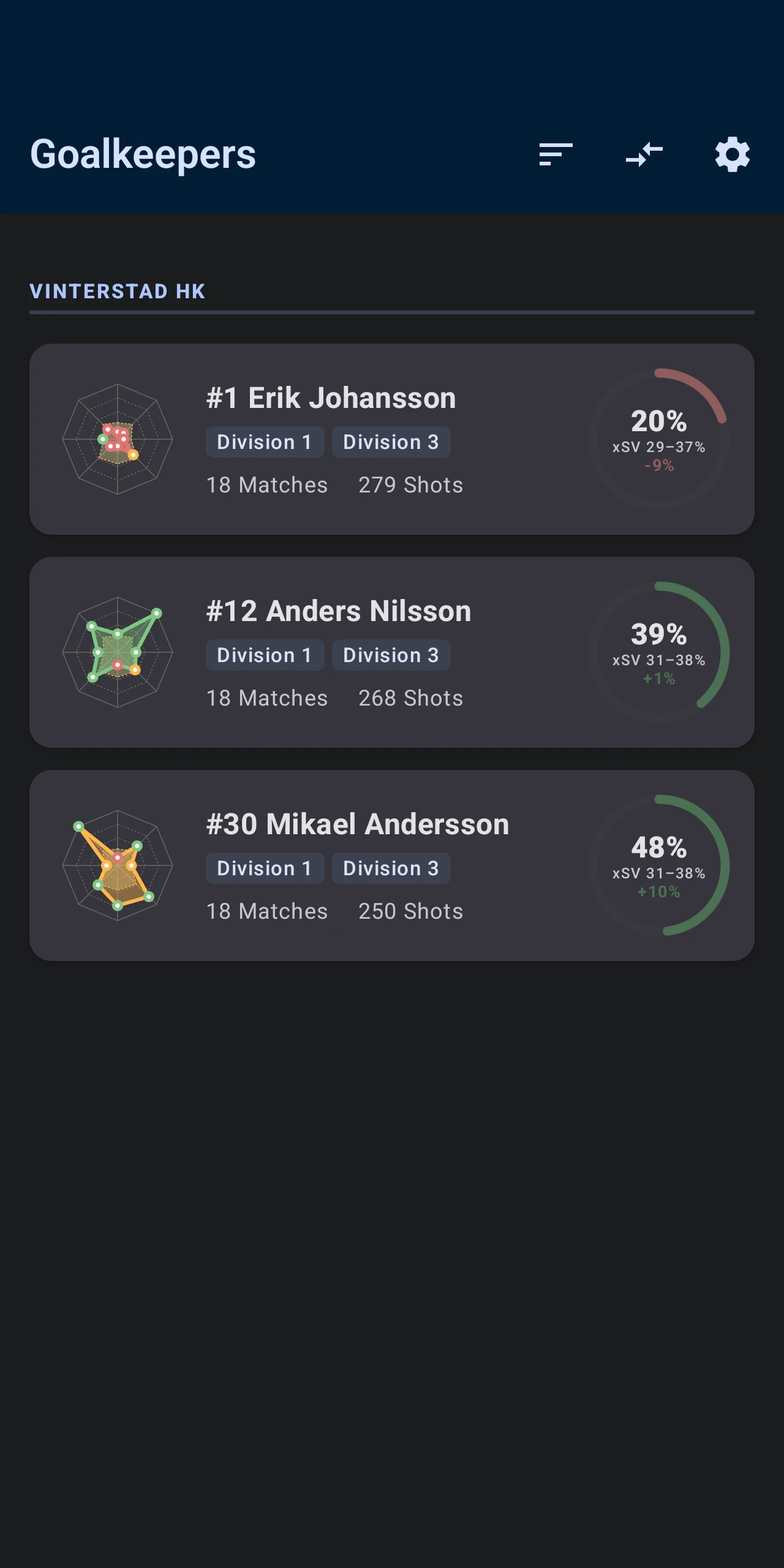
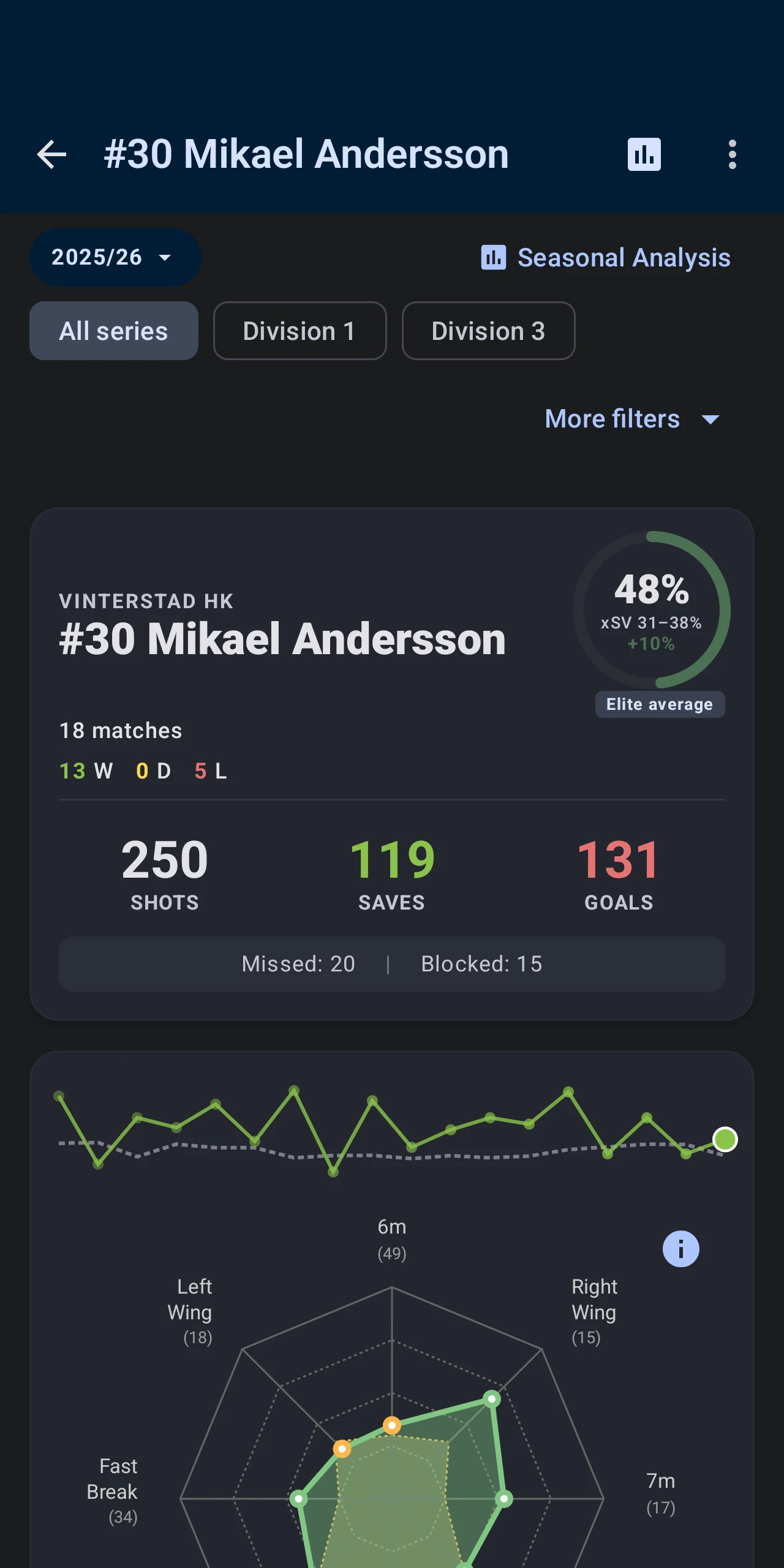
Read guide →One good match doesn't say much, and one bad match says even less. Here is how we follow a goalkeeper's development over a whole season without overreacting to single games.
Read guide →A goalkeeper's save percentage is partly the defense's number too. Here is how the defense changes the shots a goalkeeper faces, and how you can see it in the statistics.
Read guide →A paper sheet works for one match, but rarely for a whole season. Here is what a handball stats app should log, who should do it, and what to look at afterwards.
Read guide →Most 7-meter throws go in, even at the highest level. Here is what the numbers say, how to judge your goalkeeper fairly on penalties, and how to build your own notes on the shooters.
Read guide →At half-time you have a few minutes and a goalkeeper who remembers every goal. These are the three numbers we look at before deciding what to say, or whether to make a change.
Read guide →Every goal a young goalkeeper lets in is seen by everyone. Here is how parents and youth coaches can talk about matches, compare fairly and help the goalkeeper see real progress.
Read guide →