45% on Saturday and the bench is happy. 22% the weekend after and people start to worry. Most of us have been there. The trouble is that single matches swing a lot. The opponent, the defense and a few lucky or unlucky deflections can move the numbers more than the goalkeeper does.
Real development is slower than that and shows up over weeks and months. These are the things we look at when following a goalkeeper through a season, and how we try to tell actual progress from normal ups and downs.
1. Start with a baseline
You need a starting point to see progress. Use the first 4 to 6 matches of the season to get a picture of where the goalkeeper is: save percentage overall, per zone and per part of the goal.
Don't grade those first matches. They are only there to show where things stand right now. For the rest of the season you compare against that, not against last weekend or against the goalkeeper in the other team.
2. Look at several matches, not one
Instead of reacting to every game, look at the last few together. A goalkeeper who goes 30%, 24%, 36%, 31% and 38% is clearly moving in the right direction, even if the 24% in the second match felt bad at the time.
A few things to keep in mind:
- Few shots, little information. A match with 12 shots tells you much less than one with 35. Take the number of shots into account, not just the percentage.
- Look at the direction. Three or four matches going the same way means something. One odd match usually doesn't.
- Think about playing time. A goalkeeper who only comes in for the second half of decided matches faces very different shots than the starter.
3. Compare with expected saves
Save percentage depends a lot on what shots the goalkeeper faces, and the defense in front decides many of them. A month against strong teams with lots of 6-meter chances can make a goalkeeper who is getting better look like they are getting worse.
This is where expected saves (xSV) help. You compare the saves the goalkeeper actually made with what would normally be expected from the same shots. If the goalkeeper ends up further above expected as the season goes on, they are improving, whatever the raw percentage says.
4. Follow each zone
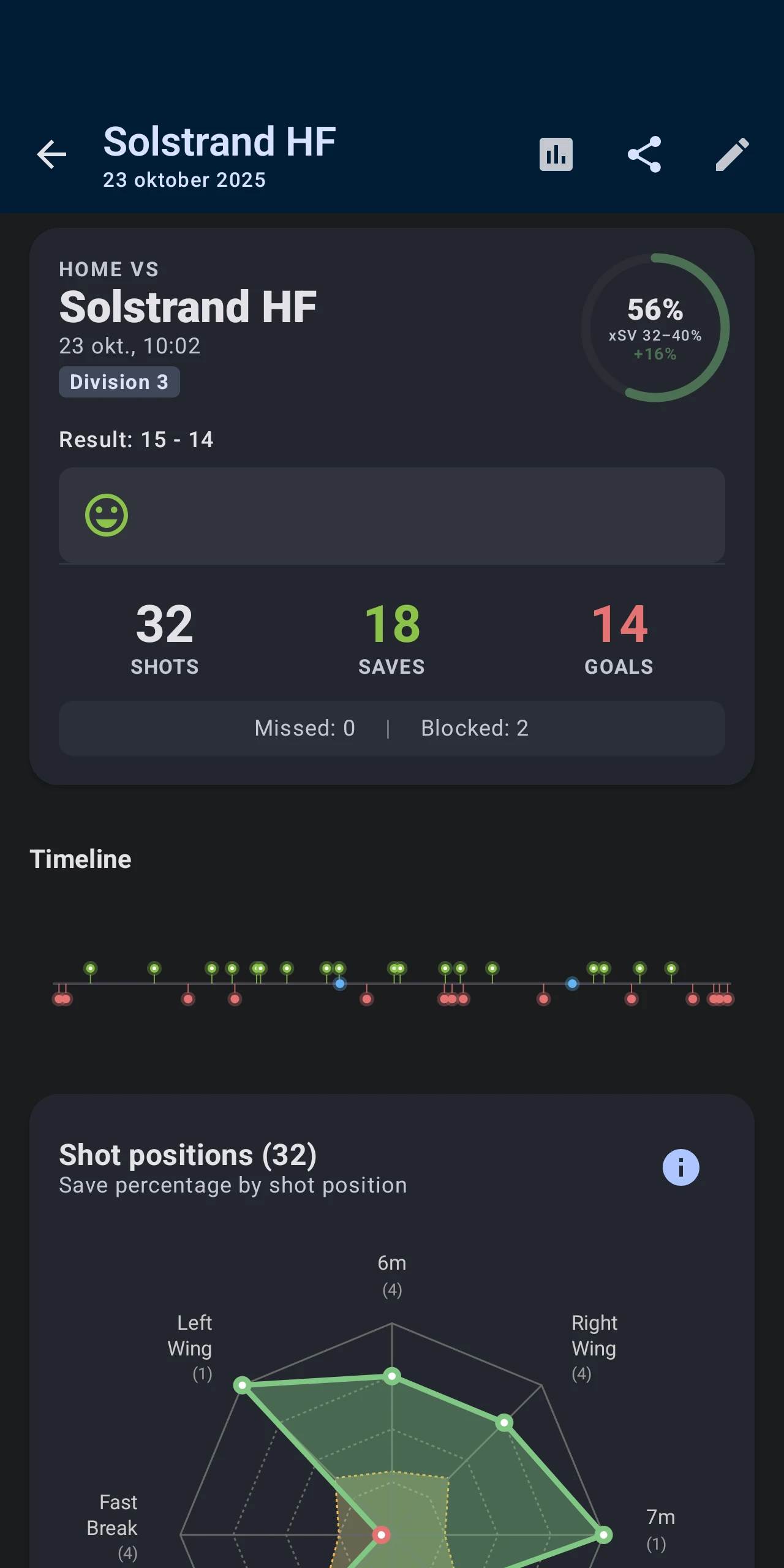
The overall number hides what you need for training. Goalkeepers rarely improve evenly. 9-meter saves might go up a lot while the wings stay where they were.
About once a month, compare each area with the baseline:
- Shot positions: 9m, 6m, left and right wing, 7m and fast breaks.
- Parts of the goal: High, mid and low on each side, plus between the legs.
- Strongest and weakest: Pick out the zone that has improved the most and the one that is still lagging.
That gives you a training plan. If low shots to the left have gone from 20% to 35% after a month of footwork drills, the drills are working. If the right wing hasn't moved at all, try something else.
5. Set goals the goalkeeper can influence
"Get to 35%" is a goal the goalkeeper only partly controls. Better goals are tied to specific things you can train, and you check them against the numbers every now and then:
- "Go from 18% to 25% on wing shots before the winter break."
- "Let in less than 20% of goals between the legs over the next six matches."
- "Be above expected saves in at least half of the matches this spring."
A short check every 4 to 6 matches is enough. More often than that and every match starts to feel like a test.
6. Compare with last season
The comparison that often means the most is not against teammates but against the goalkeeper's own last season. It is especially useful for youth goalkeepers moving up an age group, where the shooters get stronger and shoot from further out every year.
"Last season you saved 28% from 9 meters. This season, against older and stronger shooters, you're at 34%. That's real progress."
7. Keep it positive
Numbers about development should build confidence. Goalkeepers, young ones especially, already remember every goal they let in. Looking at a whole season helps them see the bigger picture (more in our guide to supporting a youth goalkeeper):
- Start with what has improved since the baseline, every time.
- Pick one thing to work on. One clear focus for a few weeks is better than a list of ten weaknesses.
- Go through it together. Let the goalkeeper look at the numbers and say what they see. It means more when they find it themselves.
How Handball GoalieAnalytics helps
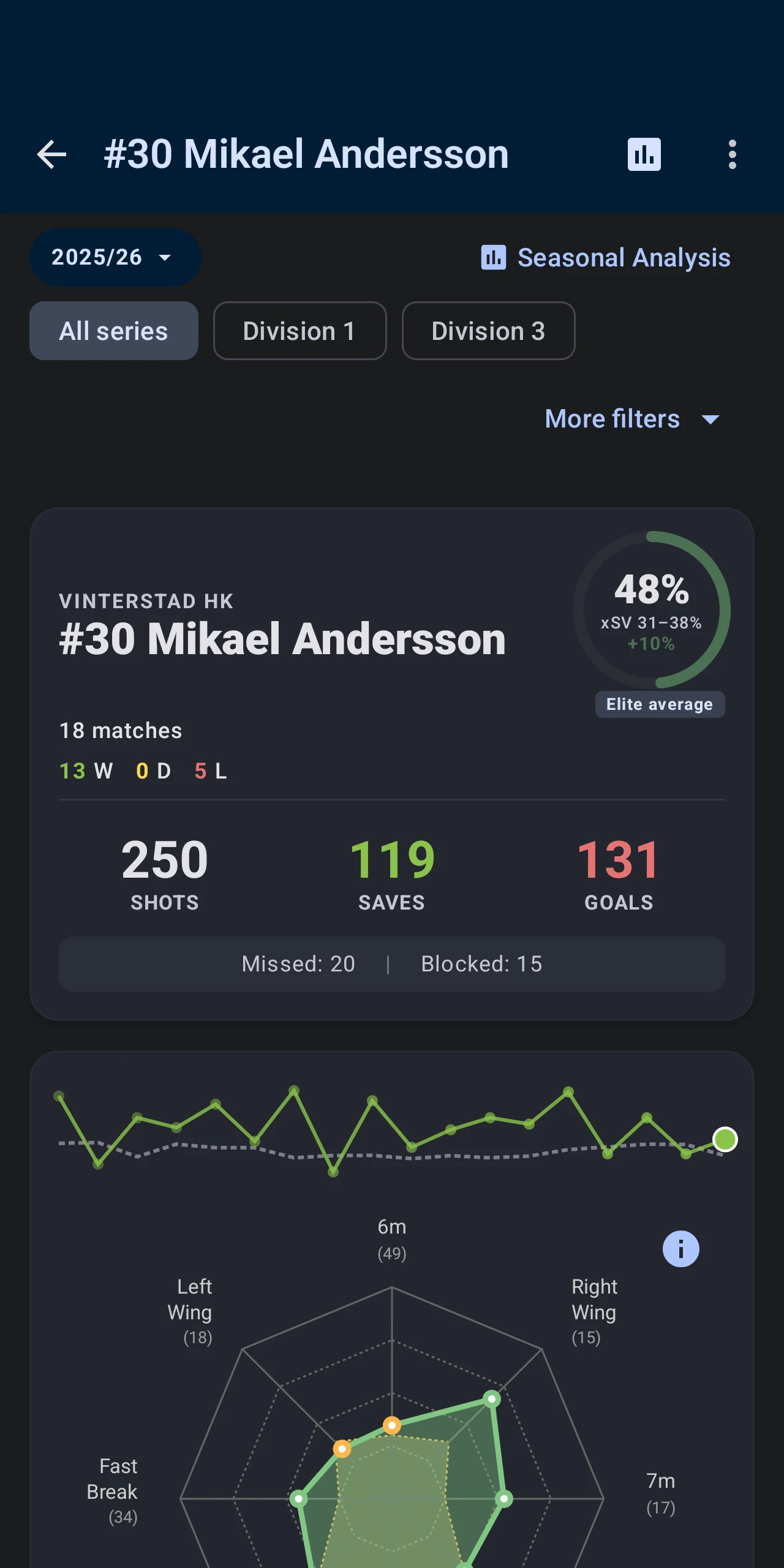
In Handball GoalieAnalytics, every match you log becomes part of the season view:
- Filter by season: See all statistics for one season, or for all seasons together.
- Season average as reference: Compare single matches with the goalkeeper's own average for the season.
- Seasonal analysis: A summary of the season with the trend for actual vs. expected saves, a breakdown by position, and the season's strongest and weakest areas.
- Compare seasons: Put two seasons side by side to see the long-term development.
To see what a season looks like, open Emma in our demo team: 20 matches, with save percentage per match, her season against expected saves and every zone of the goal.
Checklist
- Set a baseline from the first 4 to 6 matches.
- Look at several matches together, never just one.
- Use expected saves to separate development from tough opponents.
- Follow each zone and find one strength and one weakness.
- Set goals the goalkeeper can influence and check them every 4 to 6 matches.
- Compare with last season to show long-term progress.
- Keep reviews positive and focus on one thing at a time.